
 By Emily Diekhoff, M.S., CCC-SLP
What are Communicative Functions?
Communication is about interaction and we interact for a variety of reasons. These reasons are communicative functions which are the purposes we communicate during day-to-day interactions with the world around us!
We all use these communicative functions, but it is important to note that especially for AAC (Augmentative Alternative Communication) users to learn the language needed to communicate for different reasons, they need to see others do it! We can show and model on their AAC systems as we talk to them during daily interactions. We can show how we communicate different messages for different reasons using AAC devices by doing so on a regular and reliable basis. So what are the different reasons why we communicate?
1. Requesting for items/activities
This form of the communication is designed to get a desired item or action. This is typically where we start teaching in regards to communicative functions as it is the most reinforcing function for many children. Many individuals can get really good at asking for items/activities. They can make requests for their favorite foods, videos, places to go, favorite toys, etc. Making requests is motivating for many children, and it is typically one of the first reasons they initiate communication.Some examples include:
- A child points to cracker to get cracker
- A child verbalizes, “Can I have the ball?”
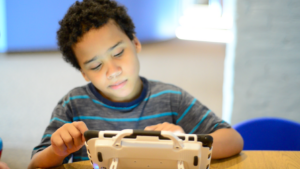
- A child selects the “juice” icon on the speech generating device to get juice
Ideas to practice requesting items:
- Withhold necessary items while doing a game, craft, or activity.
- Put items the child wants out of reach. These situations give the child opportunities to request.
There is far more to language and communication than just requesting. There are so many more reasons why we communicate! Incorporating a variety of types of communication will make learning language more fun, engaging, and motivating!
2. Refusing or rejecting items/activities
This is just what it sounds like! Basically, it is requesting for something to be gone.Some examples include:
- A child pushes a toy away on the table
- An individual says “go away!”
- A child selects “no” on his speech generating device when asked Do you want your snack?
Ideas to practice rejecting/refusing
- Give undesired activities or items and model words like “stop” “no” “all done”.
3. Requesting attention
This is another type of request but it is different from the above requests as it includes a social interaction component.Some examples include:
- A child tapping on a communication partner’s shoulder to get their attention
- A child reaching up to get his dad to pick him up
- An individual calling “mom!” when he wants to talk to her
Ideas to practice getting attention:
- Model words like “look” or “watch me” when it appears that the child is seeking attention.
4. Labeling and Describing
Labeling and naming things are important in building language! It allows you to talk about things and activities. Adjectives, adverbs, and prepositions makes it easier to describe things and talk about experiences and situations. Describing items can assist with making requests and comments more specific.Some examples include:
- A child sees a bird and says “bird”
- When reading a book, and a child says “there’s a big cat” and points to a cat in the book.
Ideas to practice labeling and describing:
- Look around you and label and/or describe what you see!
- Go on a scavenger hunt and label and describe items that you find
5. Commenting
 This involves providing information, sometimes just for social sharing on a situation. We often use it as a way to gain social interactions or share an experience.Some examples include:
- An individual says “hot” after taking a bite of food
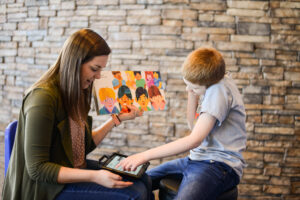
- A child selects the icon for “silly” on a speech generating device after someone tells a joke
- A child says “I don’t like this game”
Ideas to practice commenting:
- Describe ongoing activities (e.g., fun, good, boring) including opinions (I like this! I don’t like this).
6. Asking and Answering Questions
An important communicative function is being able to answer and ask a variety of different questions. Yes/no, who, what, where, when, why, and how are all types of questions that people ask and answer in everyday activities to gain or provide more information.Some examples include:
- A friend asks How old are you? And the child says “9” on his speech generating device.
- A child asks “Where are we going?”
Ideas to practice answering questions:
- Read books and ask and answer questions about the pictures or text. Show the child how to ask and/or answer questions while reading the story.
7. Expressing Feelings
This includes being able to state how one is feeling during day-to-day interactions with those around us.Examples include:
- A child says “I am hungry” right before lunch
- A child stating “I feel upset” when his toy broke
Ideas to practice expressing feelings
- Model your own feelings throughout the day
- Label how the child appears to feel
8. Engaging in Social Routines
These include social interactions that occur in day-to-day situations.
Examples include:
- A teenager says “Hey, what’s up!”
- An adult asking “How are you?” and the communication partner answers “I’m good”
Ideas to practice social routines:
- Set up times throughout the day to practice conversational skills. For example, modeling and showing how to say “hello” when you greet someone.
There are even more communication functions, but these functions, examples, and practice ideas are a great starting point to support and expand communication and language skills. Incorporating a variety of types of communication functions will make learning language more fun, engaging, and motivating!
References:
Beukelman, David R., and Pat Mirenda. Augmentative and Alternative Communication: Supporting Children and Adults with Complex Communication Needs. Paul H. Brookes Pub., 2013.
“What Are Communicative Functions & How Can You Expand Them?” Autism Classroom Resources, 23 Oct. 2016, www.autismclassroomresources.com/communicative-functions/.